Thothora Research Center for Augmented and Virtual Realities
Architecting the spatial computing era to dissolve the boundaries between physical existence and digital imagination.
VISION
To transition humanity from an era of "observing screens" to "inhabiting information," where digital intelligence is woven seamlessly into the fabric of the physical world.
CHALLENGE
We are currently trapped in the "Screen-Silo" era. Most digital information exists on 2D surfaces, disconnected from the 3D context of our physical lives. While hardware like the Vision Pro and Meta Quest have bridged some gaps, we still face a Friction and Bio-Sync Gap—the technical latency, weight of hardware, and cognitive strain (vergence-accommodation conflict) that prevent long-term immersion. Without a foundational framework for "Spatial Fluidity" and ethical "Perceptual Sovereignty," the metaverse risks becoming a fragmented, intrusive, and distracting overlay rather than an empowering extension of human capability.
MISSION
Our mission is to serve as the global nexus for spatial intelligence. We synthesize advancements in light-field displays, eye-tracking latency, and volumetric rendering into an authoritative knowledge base. By documenting the move from "Isolated Experiences" to "Shared Spatial Realities," we provide the foundational strategic roadmap required to ensure that XR (Extended Reality) is developed with absolute ergonomic safety, privacy, and intuitive human-centric design.
Specializations
Spatial Computing and OS Architectures
Analyzing the development of operating systems designed for 3D environments, focusing on gaze-and-gesture control and persistent digital anchoring.
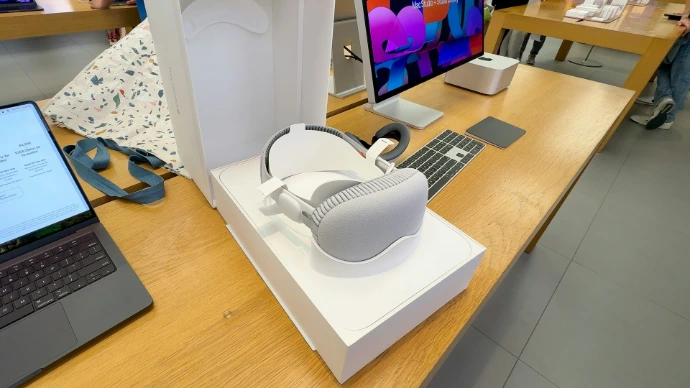

Optics and Light-Field Engineering
Investigating the physics of waveguides and varifocal displays to eliminate motion sickness and provide high-fidelity, photorealistic visuals.
Haptic Synthesis and Sensory Feedback
Exploring the use of ultrasound, soft-robotics, and electrical muscle stimulation (EMS) to provide a sense of touch and resistance in virtual space.


Spatial AI and Contextual Awareness
Focusing on "World-Sensing" algorithms that allow AR glasses to understand and react to real-world objects, lighting, and physics in real-time.
Volumetric Video and Hyper-Realistic Avatars
Investigating the capture and rendering of 3D human presences to enable "holoportation" and emotionally resonant remote collaboration.


XR Ethics and Perceptual Privacy
Addressing the protection of biometric data (eye-tracking/emotion-sensing) and the legal rights to "Mental Space" in a world of persistent AR.
Industrial and Medical Simulation
Examining the use of high-fidelity "Digital Twins" for risk-free surgical training, complex aerospace assembly, and disaster response planning.

Perspective
We believe that reality is not just what we see, but how we interact with it. The "Thothora Research Center for Augmented and Virtual Realities" operates on the principle of Integrated Presence. Our Continuous Research Series provides the roadmap for a world where technology becomes "Environmental." We move beyond the gimmick of the headset toward the era of Digital-Physical Unity, ensuring that the tools of 2026 enhance our connection to our surroundings rather than severing it.